WhatsApp Messaging Automation
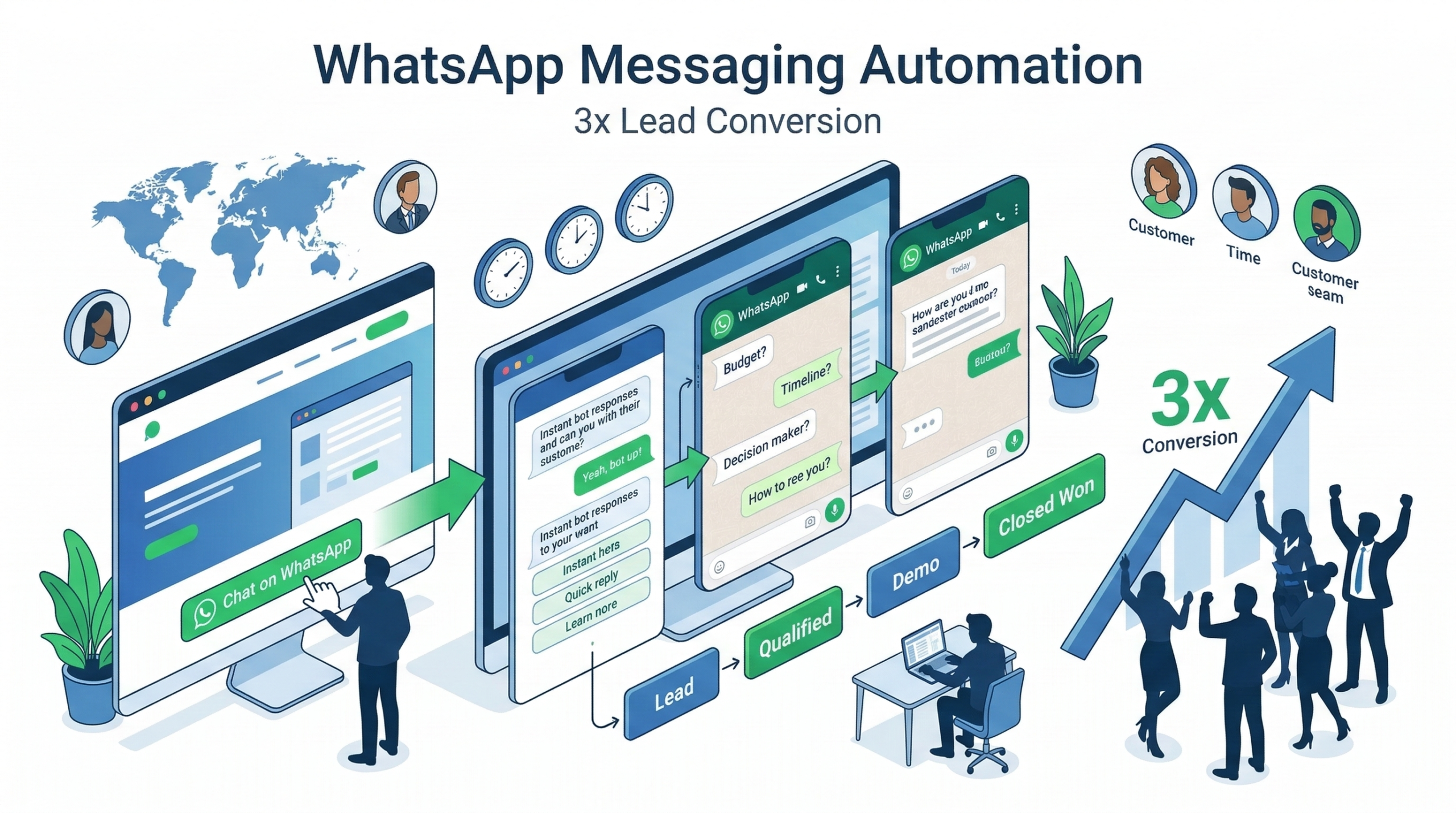
WhatsApp messaging automation transforms how businesses capture and convert leads. Companies lose 79% of leads within the first hour due to slow responses. Manual messaging creates bottlenecks as teams struggle with high volumes. WhatsApp Business API automation solves this by delivering instant responses, qualifying leads conversationally, and integrating with CRM systems.
AIPowerSolutions.in builds these WhatsApp automation systems for global businesses seeking structured lead conversion workflows.
What Is WhatsApp Messaging Automation?

WhatsApp messaging automation uses the WhatsApp Business API to create structured conversation flows. Businesses connect backend systems to WhatsApp through official API infrastructure. Incoming messages trigger predefined workflows that respond instantly.
Automation platforms process customer inquiries, qualify leads through targeted questions, and route conversations to appropriate teams. Chatbots handle initial interactions while collecting critical data like budget, timeline, and decision-making authority. Human agents receive qualified leads with complete context.
The system differs from manual WhatsApp Business App usage. Consumer apps limit businesses to single devices and basic labeling. API automation enables multi-agent access, system integrations, and enterprise-scale conversation management across global teams.
Why Messaging Automation Matters for Modern Businesses
Customers expect instant responses across digital channels. Lead response times under 5 minutes convert 21 times better than 30-minute delays. WhatsApp automation delivers sub-second replies through always-on infrastructure.
Engagement rates exceed 90% on WhatsApp versus 20–30% for email. Customers prefer conversational interfaces over forms. Mobile-first behavior drives preference for messaging over desktop web experiences. Businesses capture richer intent data through natural dialogue.
Automation eliminates response gaps during off-hours and peak demand. Global operations benefit from time zone coverage without additional staffing. Lead qualification happens systematically rather than through inconsistent manual conversations.
Email vs SMS vs WhatsApp Messaging Automation
Email open rates average 20–30% with delivery delays of hours. Critical leads go cold before teams respond. Long subject lines compete for attention amid crowded inboxes. Tracking engagement requires complex pixel systems.
SMS achieves higher open rates but limits formatting to plain text. Character restrictions prevent rich context. Links appear suspicious without preview context. Two-way conversations become clunky through threading limitations.
WhatsApp messaging automation combines SMS immediacy with email’s rich media capabilities. Interactive buttons enable one-tap actions like “View Pricing” or “Book Demo.” Images, PDFs, and location sharing provide context email cannot match. End-to-end encryption builds trust for sensitive conversations.
Customers engage naturally through familiar interface patterns. Persistent conversation threads maintain context across multiple interactions. Delivery and read receipts provide concrete engagement metrics absent in traditional channels.
Core Components of WhatsApp Messaging Automation
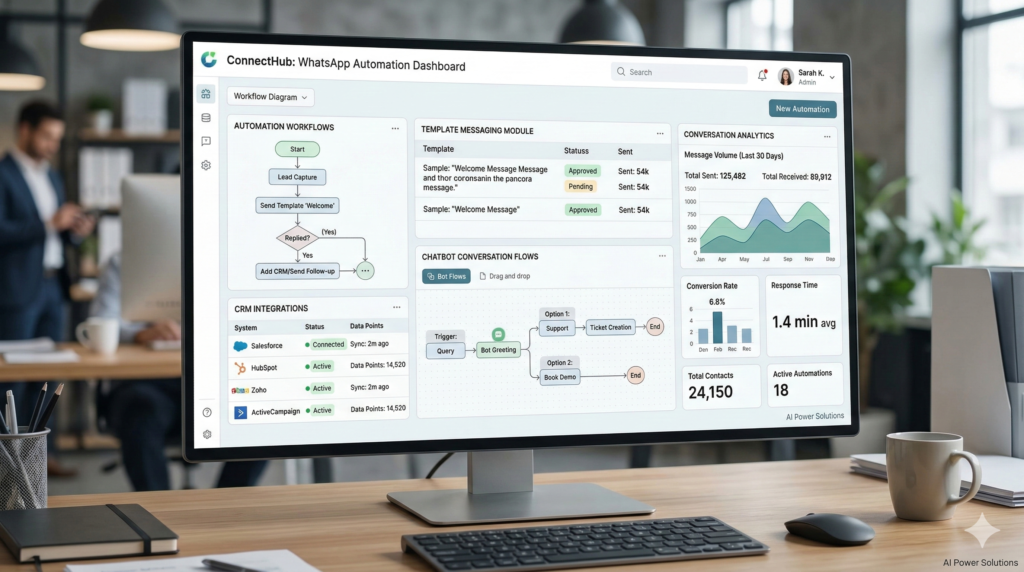
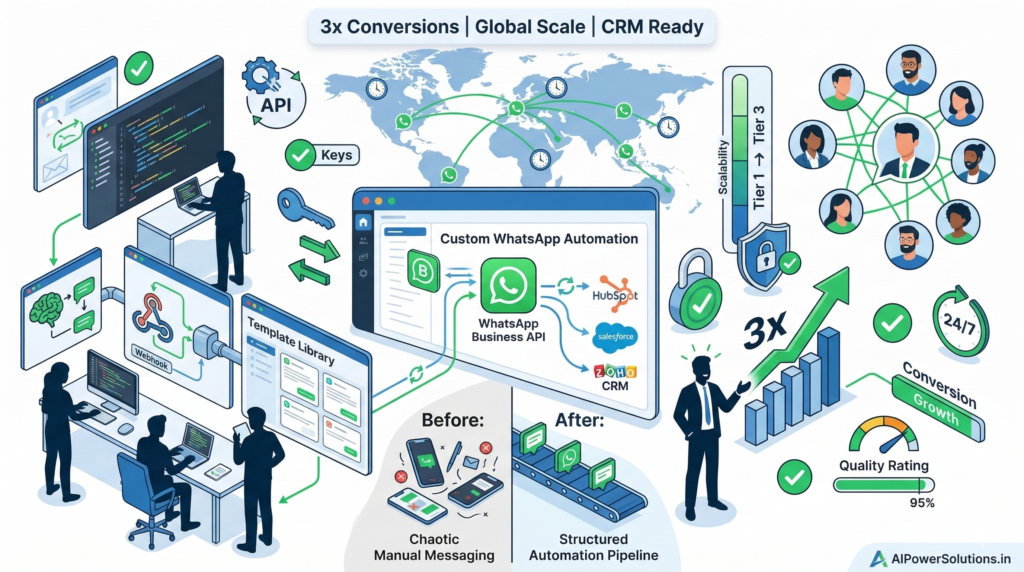
Automation workflows form the foundation. Backend platforms receive incoming messages through API webhooks. Rule-based logic or AI models classify intent and trigger appropriate responses. Workflows guide customers through qualification questions while collecting structured data.
CRM integration creates unified customer records. WhatsApp conversations sync as activities or notes within HubSpot, Salesforce, or Zoho CRM. Lead scoring updates automatically based on engagement patterns. Sales teams access complete interaction history eliminating information silos.
Chatbot automation handles initial qualification. Simple bots ask targeted questions about budget, timeline, and decision authority. Advanced conversational AI understands natural language variations. Human handoff occurs seamlessly with full context preserved.
Template messaging enables proactive communication outside 24-hour windows. Pre-approved messages deliver appointment reminders, follow-ups, and promotional content. Dynamic variables personalize content while maintaining compliance.
Conversation tracking provides enterprise visibility. Analytics platforms monitor response times, conversion rates, and channel performance. Quality ratings ensure message deliverability. Teams optimize workflows based on real performance data.
Automation Workflows for Lead Conversion
Instant lead response workflows activate within seconds of website widget clicks or ad responses. New leads receive personalized greetings referencing their source. Qualification begins immediately through quick-reply buttons covering service interests and urgency.
Abandoned cart recovery targets ecommerce customers. Shopping carts trigger WhatsApp messages offering assistance. Interactive catalogs display remaining items with one-tap add-to-cart functionality. Dynamic discount codes create urgency for stalled purchases.
Appointment reminders reduce no-shows by 60–80%. Multi-stage sequences deliver 48-hour detailed confirmations, 24-hour verification requests, and 2-hour final alerts. Self-service rescheduling maintains calendar accuracy without staff intervention.
Follow-up sequences nurture medium-temperature leads. Non-responsive prospects receive value-first content like case studies or industry insights. Gradual qualification builds toward sales conversations. Automated triggers activate based on time elapsed and engagement patterns.
Each workflow captures structured data feeding CRM systems. Lead scoring improves as engagement patterns emerge. Sales teams focus on high-intent prospects rather than manual qualification.
CRM Integration and Sales Pipeline Automation
WhatsApp automation platforms connect directly to CRM APIs. New conversations create or update contact records with source attribution and interaction history. Custom fields capture qualification data like budget range and decision timeline.
Lead scoring algorithms weigh WhatsApp engagement alongside web behavior and email opens. High-velocity responders receive priority routing to closing specialists. Medium-temperature leads enter automated nurture sequences balancing human touchpoints.
Pipeline stages update automatically based on conversation outcomes. “SQL” tags trigger sales notifications. “Demo Booked” conversations create calendar events. Lost opportunities feed retargeting campaigns with precise objection data.
Shared inbox systems enable collaboration across sales, marketing, and customer success teams. Conversation transcripts provide complete context eliminating information transfer delays. Performance analytics reveal top-performing workflows and agent patterns.
Compliance and Template Messaging Rules
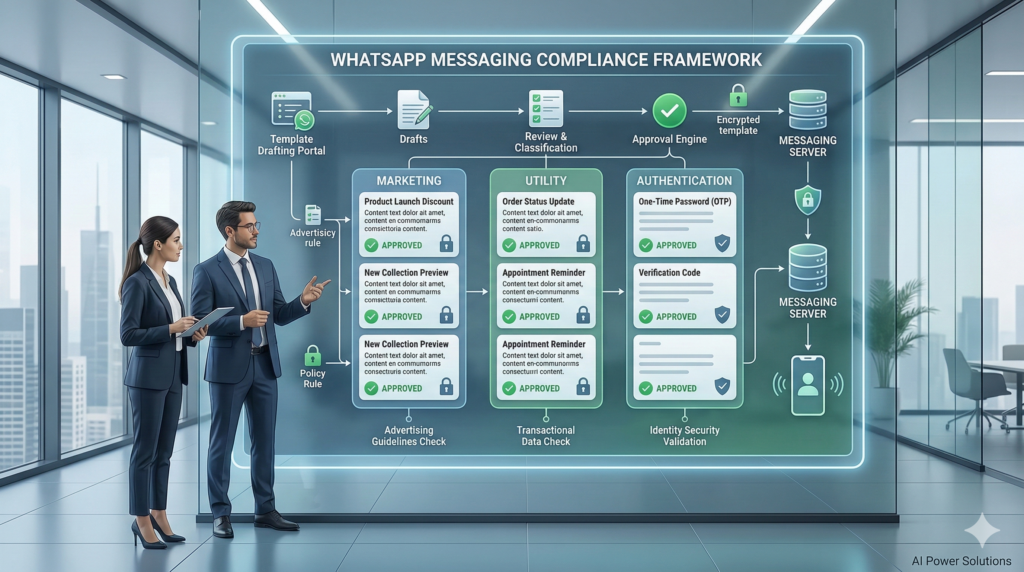
WhatsApp enforces strict policies protecting user experience. The 24-hour messaging window permits free-form replies during active conversations. Customer messages restart timers enabling natural support interactions.
Template messaging governs proactive communication outside windows. Businesses submit messages for Meta approval covering common scenarios like appointment reminders and follow-ups. Utility templates handle transactional alerts. Marketing templates require opt-in consent.
Opt-in requirements mandate clear permission before promotional messaging. Double opt-in processes verify consent through confirmation links. Transparent preference centers enable customers to adjust notification frequency and categories.
Quality ratings determine delivery success. High-volume senders maintain green ratings through relevant content and optimal timing. Dropping below thresholds restricts reach. Compliance teams monitor template performance and user feedback continuously.
Scalability and Messaging Tiers
WhatsApp messaging tiers scale with conversation volume.
Tier 1 supports 1,000 unique customers daily.
Tier 2 expands to 10,000.
And Tier 3 handles 100,000 conversations.
Businesses qualify through consistent quality ratings and phone number reputation.
Automation platforms distribute traffic across multiple WhatsApp Business Accounts. Load balancing prevents single-point failures. Global businesses deploy region-specific numbers maintaining local presence ratings. Redundancy ensures uptime during peak demand.
Enterprise features unlock at higher tiers including advanced analytics, dedicated support, and API rate limit increases. Scalability supports growth from 100 daily leads to 10,000 without infrastructure changes.
Real Business Example: SaaS Company Lead Conversion
A B2B SaaS company struggled with 12% lead conversion from inbound demos. Manual WhatsApp responses averaged 45-minute delays. The team implemented WhatsApp Business API automation through AIPowerSolutions.in.
New workflow: website visitors clicked WhatsApp widgets triggering instant qualification flows. Chatbots asked about company size, current tech stack, and implementation timeline. High-fit leads routed to sales within 90 seconds.
Results after 90 days
Response time: 45 minutes → 12 seconds
Lead qualification rate: 28% → 67%
Demo bookings: 12% → 38% of inbound leads
Sales cycle: 28 days → 18 days
CRM integration created complete lead profiles. Marketing analyzed conversation patterns to refine targeting. The system scaled to 800 daily conversations without additional headcount.
Common Mistakes Businesses Make
Manual chat reliance creates capacity limits. Single WhatsApp Business accounts tie teams to individual devices. Scaling requires structured API infrastructure from inception.
Poor qualification flows waste sales time. Vague discovery questions yield low-quality leads. Structured workflows capture decision authority, budget range, and implementation timeline systematically.
Ignoring compliance risks account suspension. Unapproved templates fail delivery. Excessive frequency drops quality ratings. Businesses establish governance processes early.
Siloed systems prevent optimization. WhatsApp conversations disconnected from CRM create data gaps. Sales lacks context. Marketing cannot attribute revenue. Unified platforms enable complete visibility.
Over-automation frustrates prospects. Complex chatbot flows create dead ends. Clear human escalation paths maintain trust. Balanced systems qualify efficiently while preserving relationships.
Why Choose AIPowerSolutions.in
AIPowerSolutions.in designs WhatsApp messaging automation systems for global enterprises. The team builds custom workflows integrating WhatsApp Business API with HubSpot, Salesforce, and custom CRMs.
Specialists architect scalable infrastructure handling thousands of daily conversations across messaging tiers. Compliance frameworks maintain green quality ratings. Advanced analytics reveal optimization opportunities across funnels.
Businesses receive complete implementation including template libraries, qualification flows, and performance dashboards. Ongoing optimization refines workflows based on real conversation data and conversion patterns.
Future of WhatsApp Messaging Automation
AI-driven qualification analyzes natural language patterns to score lead intent accurately. Predictive models identify buying signals across conversation history. Dynamic workflows adapt to prospect behavior in real time.
Conversational commerce embeds payments and product actions within messaging flows. Prospects complete purchases without leaving WhatsApp. Seamless transactions accelerate revenue cycles.
Unified platforms coordinate WhatsApp, email, and web chat through single workflows. Channel preference determines delivery path while maintaining consistent customer experience.
Predictive engagement analyzes historical patterns to optimize timing and content. Lapsed leads receive personalized re-engagement sequences. High-LTV customers trigger proactive nurturing.
Conclusion
WhatsApp messaging automation creates competitive advantages for modern businesses. Instant responses convert leads 21 times better than delayed follow-ups. Structured qualification captures decision-maker intent systematically. CRM integration eliminates data silos across functions.
Global companies scale conversation volume through WhatsApp Business API infrastructure. Compliance frameworks maintain deliverability while enabling proactive nurturing. Analytics reveal continuous optimization opportunities across entire funnels.
Businesses ignoring structured messaging automation leave conversion on the table. Manual processes cannot compete with sub-second AI qualification. WhatsApp messaging automation delivers the infrastructure modern lead conversion demands.
FAQ
What is WhatsApp messaging automation?
WhatsApp messaging automation uses Business API infrastructure to create structured conversation workflows. Systems respond instantly to leads, qualify prospects conversationally, and integrate with CRM platforms.
How does WhatsApp automation improve lead conversion?
Automation delivers responses within seconds rather than hours. Qualification flows capture budget, timeline, and decision authority systematically. CRM integration creates complete lead profiles for sales teams.
Which CRM systems integrate with WhatsApp automation?
HubSpot, Salesforce, Zoho CRM, and Pipedrive connect natively. Custom integrations handle enterprise data platforms. Conversation data syncs as activities with complete interaction transcripts.
What compliance rules apply to WhatsApp automation?
24-hour messaging windows govern free-form conversations. Template messages require Meta approval for proactive communication. Opt-in consent mandates clear permission workflows.
Can small businesses use WhatsApp messaging automation?
Tier 1 messaging supports 1,000 unique customers daily. Most small businesses operate comfortably within starter tiers. Scalability enables growth without infrastructure changes.
How quickly can businesses implement WhatsApp automation?
Standard implementations complete within 2–4 weeks. Template approval cycles require 48–72 hours. Custom workflows and CRM integrations extend timelines based on complexity.
What results do businesses typically see?
Lead response times drop from hours to seconds. Conversion rates improve 3–5x through instant engagement. Sales cycles accelerate 20–40% with qualified leads reaching closing stages faster.
Does WhatsApp automation work globally?
Businesses deploy region-specific numbers maintaining local compliance. Multi-language support handles global customer bases. Time zone automation ensures appropriate delivery timing.