

Introduction
Most businesses today already receive leads and customer inquiries through WhatsApp, but very few turn those chats into a consistent, predictable sales engine. Conversations often remain scattered across individual phones, follow-ups get delayed or forgotten, and managers lack clear visibility into which interactions actually generate revenue. As a result, sales processes become chaotic, overly dependent on individual performance, difficult to scale, and nearly impossible to measure accurately.
A WhatsApp Sales Machine addresses this gap. Instead of treating WhatsApp as an informal communication tool, it transforms it into a structured, trackable, and scalable sales system. By combining the WhatsApp Official API with automation and CRM integration, every conversation becomes part of a defined funnel—from lead capture to closing and beyond. This shift replaces randomness with predictability and turns daily conversations into a reliable revenue engine.
What Is a WhatsApp Sales Machine?
A WhatsApp Sales Machine is a structured workflow that converts conversations into a predictable sales pipeline. Rather than allowing chats to progress without direction, it guides each interaction through defined stages such as initial contact, qualification, nurturing, negotiation, and closing. The WhatsApp Official API serves as the backbone, enabling multiple agents, automation systems, and integrations to operate within a unified environment.
In essence, it is your sales playbook embedded into conversational flows. Instead of relying on individual salespeople to remember every step, the system handles repetitive tasks through automation and templates. This allows your team to focus on high-value interactions such as understanding customer needs, building trust, and closing deals.
Over time, this structured approach ensures consistency across all interactions, improves tracking, and creates a predictable system where revenue outcomes can be forecasted based on conversation data.
Why Traditional Sales Channels Fail?

Traditional channels like email, web forms, and phone calls are not aligned with modern customer behavior. Today’s buyers expect fast, mobile-friendly, and conversational interactions. When businesses rely on outdated systems, several problems arise.
Response times are often slow, causing leads to lose interest or move to competitors who reply faster. Visibility is limited, as phone calls and scattered chats do not provide a clear picture of the sales pipeline. There is also friction in the user journey, especially when customers are forced to switch from quick messaging platforms to lengthy forms or emails. As volume increases, follow-ups become inconsistent, and valuable leads slip through unnoticed.
WhatsApp, on the other hand, aligns naturally with how people communicate. When structured properly, it creates a seamless, real-time interaction flow that keeps prospects engaged and moves them efficiently through the sales process.
Core Components Explained
A WhatsApp Sales Machine is built on several interconnected components that function together as a unified system. The foundation is the WhatsApp Official API, which provides an enterprise-grade environment where multiple agents can operate on a single number. It enables advanced messaging formats, CRM integrations, and centralized tracking, moving the business beyond the limitations of individual devices.
Equally important are well-defined entry points that consistently drive leads into WhatsApp. These include click-to-WhatsApp advertisements, website chat widgets, QR codes, and direct links from email or SMS. Each entry point should initiate a structured conversation rather than an empty chat, ensuring that every interaction begins with clear direction.
Within the system, qualification and segmentation logic plays a critical role. Through guided questions and interactive responses, the system identifies customer intent, categorizes leads, and assigns them accordingly. This ensures that high-potential leads receive immediate attention while others are nurtured appropriately.
Nurturing and follow-up mechanisms maintain engagement over time. Instead of relying on manual reminders, automated sequences deliver relevant content, re-engage inactive leads, and sustain interest until the prospect is ready to move forward.
When a lead shows strong intent, the system transitions seamlessly to human interaction. Sales representatives receive complete context, allowing them to engage effectively, address concerns, and close deals. This balance between automation and human touch ensures both efficiency and personalization.
Finally, analytics and tracking provide visibility into performance. Businesses can monitor lead flow, conversion rates, response times, and revenue contribution, enabling continuous improvement and scalability.
Step-By-Step Setup Process
Building a WhatsApp Sales Machine begins with understanding your existing sales funnel. Every stage—from initial inquiry to final conversion—should be mapped and then translated into conversational steps within WhatsApp.
Once this foundation is clear, the next step is implementing the WhatsApp Official API through a suitable platform that supports automation, multi-agent access, and CRM integration. After the technical setup, the focus shifts to designing the initial user journey. This includes creating a structured welcome flow that captures essential details and sets the tone for further interaction.
As leads move through the system, qualification and routing logic ensures they are directed appropriately based on their intent. High-value prospects are assigned to sales representatives, while others enter nurturing sequences designed to build interest over time.
Follow-up systems are then introduced to maintain engagement. These include timed reminders, personalized messages, and reactivation strategies that ensure no opportunity is lost.
Over time, the system is refined through continuous monitoring and optimization. Businesses adjust messaging, timing, and workflows to improve conversion rates and overall performance, gradually evolving the system into a reliable revenue engine.
Advanced Strategies
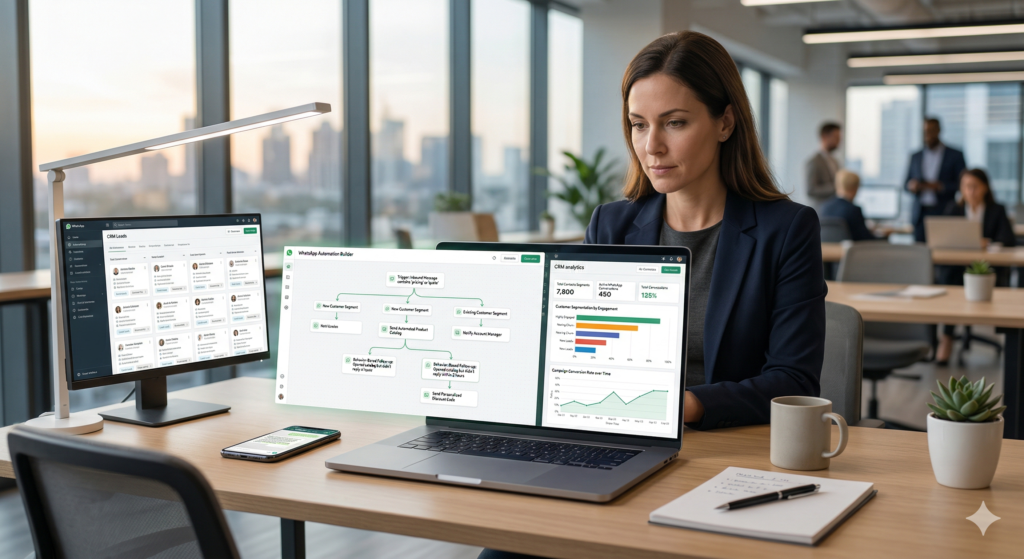
Once the basic system is operational, advanced strategies can significantly enhance its effectiveness. AI-assisted qualification allows the system to understand natural language queries, provide relevant responses, and prepare leads before human involvement.
Dynamic pricing and personalized offers further streamline the buying process by delivering accurate and tailored information directly within the chat. This reduces friction and accelerates decision-making.
Another powerful approach is directing high-intent traffic from multiple channels into WhatsApp. Whether through ads, email campaigns, or social media, guiding users into a structured WhatsApp flow ensures better engagement and higher conversion rates.
Common Mistakes to Avoid
Despite its advantages, implementing a WhatsApp Sales Machine incorrectly can limit its effectiveness. One common mistake is treating WhatsApp like a mass messaging platform and sending generic promotional content. This approach often leads to disengagement and even customer complaints.
Over-automation is another issue. When conversations feel robotic and lack human intervention, customer experience suffers. It is essential to strike a balance where automation supports but does not replace meaningful interaction.
Failing to integrate with a CRM system can also create data silos, making it difficult to track performance and optimize processes. Additionally, neglecting regular analysis and updates can result in stagnant performance over time.
Use Cases
The WhatsApp Sales Machine is versatile and applicable across industries. In e-commerce, it can guide customers from product discovery to purchase while handling cart recovery and follow-ups. In SaaS and B2B environments, it supports lead qualification, demo scheduling, and long-term deal nurturing.
Service-based businesses benefit from streamlined inquiry handling, quotation sharing, and booking confirmations. Educational institutions can use it for student inquiries, counseling sessions, and enrollment follow-ups.
Across all these use cases, the core principle remains the same: structured conversations that lead to measurable outcomes.
Conclusion

A WhatsApp Sales Machine transforms everyday conversations into a structured, predictable revenue system. By combining automation, CRM integration, and real-time communication, businesses gain control, visibility, and scalability in their sales processes.
Instead of relying on manual effort and inconsistent follow-ups, this system ensures that every interaction contributes to a larger, measurable goal. Over time, it becomes a powerful asset that not only increases conversions but also enhances customer experience and operational efficiency.
FAQ’S
1. What exactly is the WhatsApp Official API?
It is Meta’s official solution that allows businesses to use WhatsApp at scale with automation, CRM integration, and multi-agent support.
2. Do I need a CRM to build a WhatsApp Sales Machine?
While not mandatory initially, CRM integration is highly recommended for tracking leads, managing pipelines, and measuring performance.
3. How is this different from WhatsApp Web?
WhatsApp Web is limited to individual use, whereas the API enables scalability, automation, and team collaboration.
4. Will automation make communication feel spammy?
Not if implemented correctly. When used thoughtfully, automation enhances responsiveness and relevance.
5. How long does setup take?
A basic system can be implemented within a few weeks, while advanced setups may take longer.
CTA
If you want to transform your WhatsApp conversations into a predictable revenue system, start by designing a structured sales flow and integrating it with the WhatsApp Official API. With the right setup, your business can move from scattered chats to a scalable and measurable sales engine.