Businesses face exploding customer support volumes across digital channels. Email tickets create response delays averaging 12-24 hours. Phone queues frustrate customers with hold times. Support teams drown in repetitive inquiries lacking context. WhatsApp customer support automation solves these problems through instant messaging workflows. The WhatsApp Business API enables structured support systems serving thousands daily. Automation handles FAQs while routing complex issues efficiently.
AIPowerSolutions.in deploys WhatsApp customer support automation systems for global enterprises requiring reliable messaging infrastructure.
What Is WhatsApp Customer Support Automation?
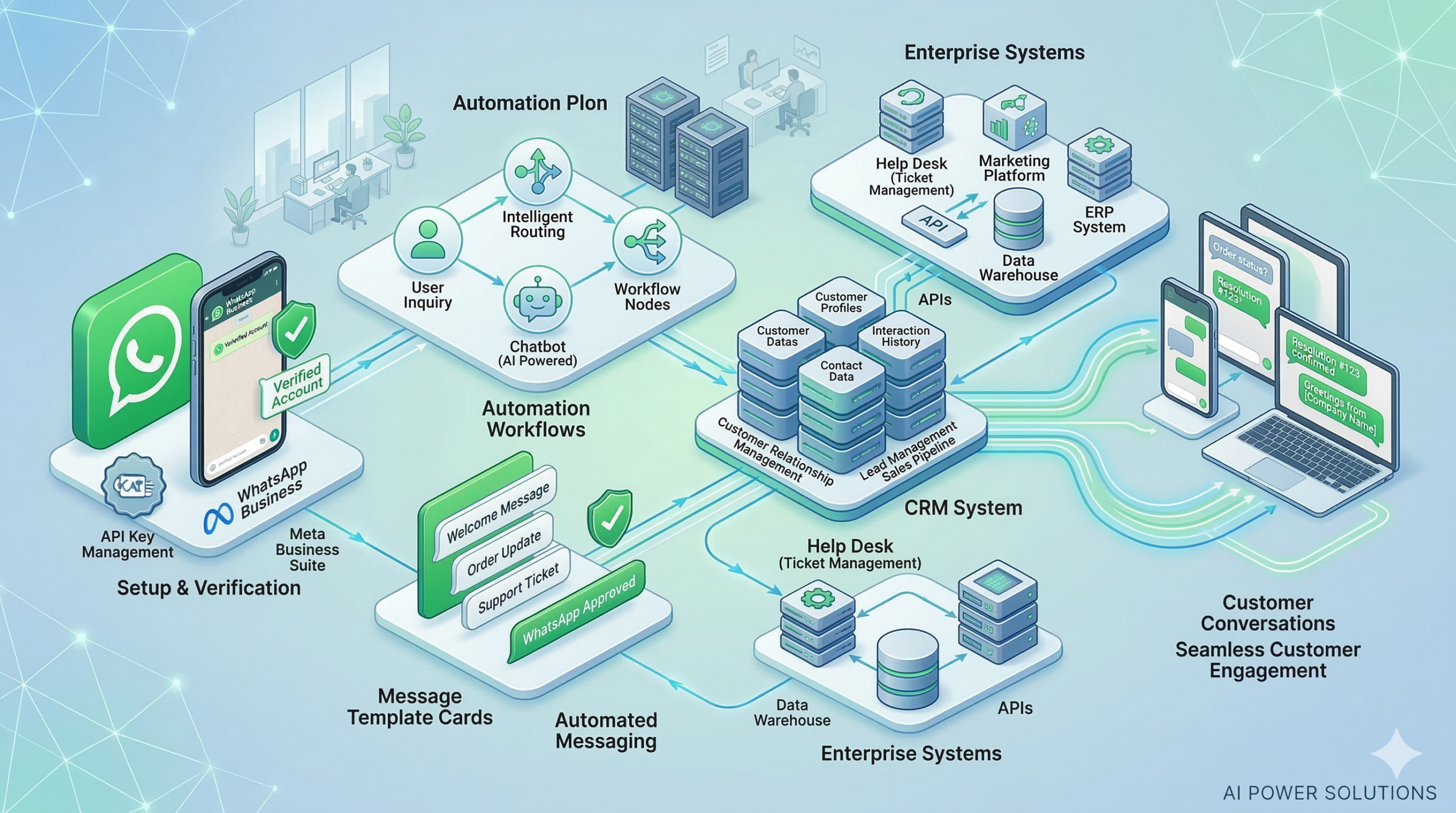
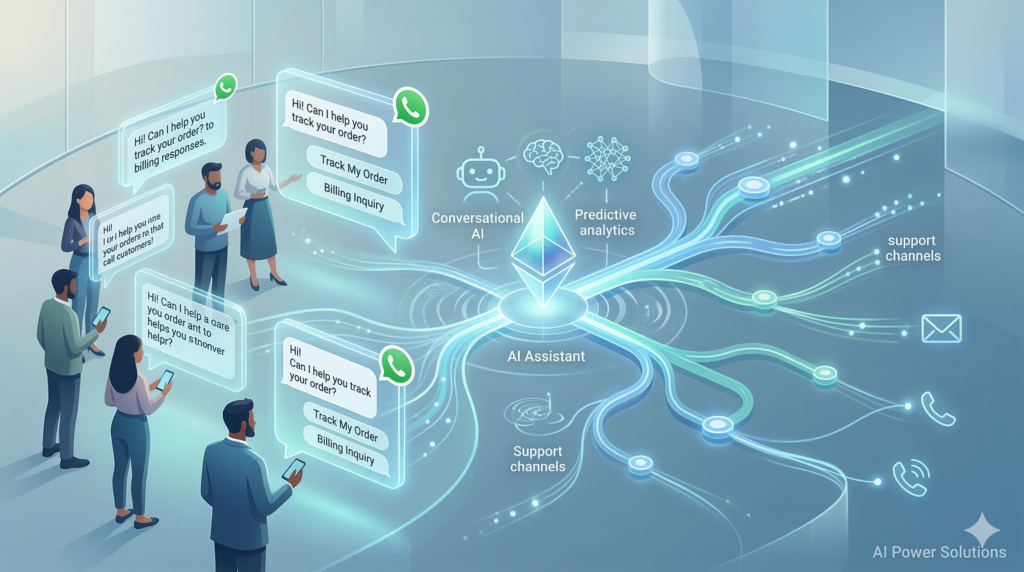
WhatsApp customer support automation uses the WhatsApp Business API to create structured support workflows. Incoming messages trigger predefined response sequences. Automation platforms classify inquiries through keyword matching or AI intent detection. Simple issues resolve through instant answers. Complex problems route to specialized agent teams.
Chatbots collect essential details like order numbers, account information, and issue descriptions. Backend systems query databases for real-time information. Responses deliver within seconds through official API infrastructure. Human agents receive complete context eliminating repetitive discovery questions.
The system differs from manual WhatsApp Business App usage. Consumer apps limit access to single devices. API automation enables shared team inboxes, system integrations, and enterprise-scale conversation management across global support operations.
Why Businesses Are Moving Support to WhatsApp
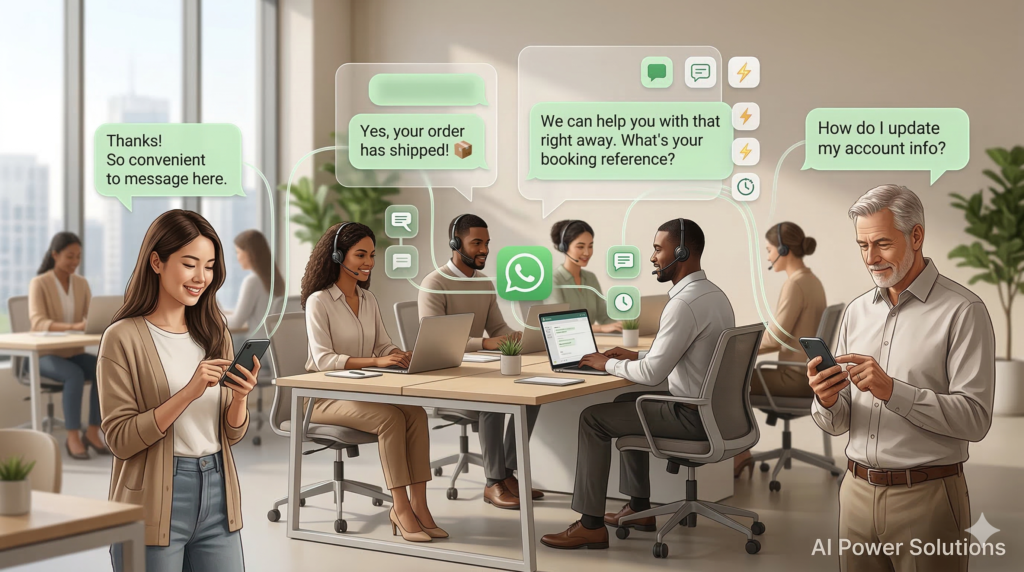
Customers prefer messaging over traditional channels. WhatsApp achieves 98% open rates within 3 minutes versus email’s 20-30% over hours. Mobile-first behavior drives preference for smartphone-native interfaces. Support conversations continue naturally across workdays rather than rigid ticket schedules.
Faster communication reduces churn. Issues resolve before frustration escalates. Engagement rates exceed phone and email significantly. Rich media sharing clarifies problems instantly through screenshots, videos, and documents. Asynchronous messaging accommodates customer schedules without hold times.
Global businesses benefit from 24/7 availability without timezone staffing. Automation handles peak demand periods. Support teams focus on high-value interactions rather than repetitive inquiries. Customer satisfaction improves through consistent, always-available communication channels.
Email Support vs Chat Support vs WhatsApp Support
Email support creates delivery delays and low visibility. Customers wait 12-24 hours for responses. Long threads lose context over time. Tracking conversation status requires complex ticketing systems. Engagement drops when customers forget original issues.
Chat support improves response speed but fragments across platforms. Web chat widgets serve website visitors only. Separate tools handle mobile inquiries. Teams switch between interfaces losing productivity. Conversation history scatters across multiple systems.
WhatsApp support combines immediacy with persistence. Single conversations maintain complete context across interactions. End-to-end encryption builds trust for sensitive issues. Interactive buttons enable one-tap actions like “Track Order” or “Reset Password.” Rich media clarifies technical problems instantly.
Customers engage naturally through familiar interface patterns. Delivery receipts provide concrete performance metrics. Support teams access complete interaction histories eliminating repetitive discovery. Mobile accessibility serves customers wherever they work or travel.
Automation Workflows for Customer Support
Automated FAQ responses handle 60-80% of common inquiries. Customers ask about delivery times, return policies, or account access. Systems deliver pre-approved answers with links to help articles. Agents focus on complex technical issues requiring human judgment.
Ticket routing automation classifies conversations by intent. Billing inquiries route to finance specialists. Technical problems reach engineering support. Order issues direct to fulfillment teams. Routing logic considers language, priority keywords, and customer value.
Order tracking responses integrate with logistics APIs. Customers receive real-time shipment locations and delivery ETAs. Interactive maps display current positions. Exception handling covers delays and address corrections. Proactive alerts prevent “where is my order” inquiries.
Service request handling creates structured support tickets. Automation collects serial numbers, warranty information, and screenshots. Backend systems verify eligibility automatically. Technicians receive complete context eliminating back-and-forth discovery conversations.
Chatbots for WhatsApp Customer Support
Repetitive question handling frees agents for complex work. Password resets, account verification, and basic troubleshooting resolve through guided flows. Customers complete self-service actions without waiting for live support availability.
Issue detail collection structures unstructured inquiries. Chatbots ask targeted questions gathering order numbers, error codes, and screenshots. Qualification logic determines agent routing or automated resolution paths. Complete context eliminates repetitive discovery work.
Conversation routing delivers qualified interactions to specialists. Intent classification analyzes content patterns matching conversations to expertise areas. Priority queues serve VIP customers first. Business hours routing directs off-hours inquiries to async workflows.
Advanced conversational AI understands natural language variations. “My package hasn’t arrived” triggers order tracking flows regardless of exact phrasing. Multilingual support serves global customer bases through automatic language detection.
CRM Integration for Support Teams
WhatsApp conversations sync as timeline activities within CRM platforms. HubSpot contact records display complete interaction histories alongside email and call logs. Support teams access prior conversations eliminating repetitive discovery questions.
Support ticket tracking creates bidirectional synchronization. WhatsApp conversations generate Zendesk or Freshdesk tickets automatically. Agent replies sync back to messaging threads. Customers receive consistent updates across channels without duplication.
Customer profile management enriches records with interaction data. Support resolution details, common issues, and escalation patterns feed into 360-degree profiles. Sales teams access technical context for account expansion conversations. Marketing segments customers by support patterns.
Custom field mapping captures WhatsApp-specific data points. Issue categories, resolution times, and sentiment scores enhance analytics capabilities. Cross-functional teams access unified customer context eliminating information silos across departments.
Compliance and Messaging Policies
24-hour messaging window permits free-form conversations during active customer sessions. Incoming messages restart timers enabling natural support interactions. Template messages maintain communication outside these time-limited windows.
Template messaging requires Meta approval for proactive notifications. Utility templates deliver transactional alerts like delivery updates and service confirmations. Marketing templates promote offers only to opted-in customers. Approval cycles average 24-72 hours.
User opt-in requirements mandate explicit permission before promotional content. Double opt-in processes verify consent through confirmation steps. Preference management enables customers to adjust notification frequency and categories through self-service options.
Meta monitors sender quality ratings continuously. Relevant content, optimal timing, and low complaint rates maintain green ratings. Dropping below thresholds restricts message deliverability. Support teams establish governance processes ensuring compliance at scale.
Scalability of WhatsApp Business API Setup Customer Support Systems
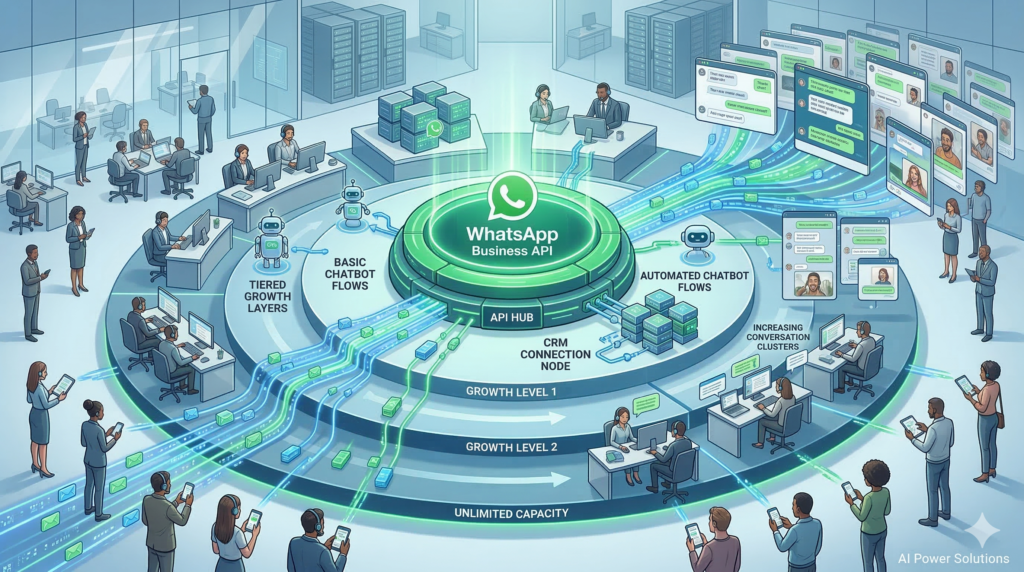
Tier 1 messaging supports 1,000 unique customers daily. Small support teams handle initial volumes comfortably. Quality ratings determine eligibility for tier progression as conversation volumes grow.
Tier 2 infrastructure expands to 10,000 daily conversations. Mid-sized support operations distribute traffic across multiple phone numbers. Load balancing prevents single-point capacity constraints during peak demand.
Tier 3 systems manage 100,000 conversations daily. Enterprise support teams access advanced analytics and dedicated Meta support. Global operations deploy region-specific numbers maintaining local deliverability ratings.
Automation platforms scale horizontally across messaging tiers. Single implementations support growth from hundreds to thousands of daily interactions. Infrastructure investments focus on workflow optimization rather than capacity expansion.
Real Business Example of WhatsApp Business API Setup
A SaaS company managed 1,200 monthly support tickets through email and Zendesk chat. Average response times reached 18 hours. Customer churn correlated with support delays. The team implemented WhatsApp customer support automation through AIPowerSolutions.in.
Implementation delivered:
- Intent classification for 18 common issues
- Zendesk integration creating bidirectional tickets
- 24 template approvals for proactive alerts
- Multilingual chatbot covering 7 languages
Six-month results:
- First response time: 18 hours → 47 seconds
- Resolution time: 4.2 days → 8.3 hours
- Ticket deflection rate: 12% → 68%
- Customer satisfaction: 3.7/5 → 4.6/5
Support headcount remained constant while handling 340% more conversations. Churn dropped 27% through faster issue resolution. Marketing analyzed support patterns to improve onboarding materials.
Common Mistakes Businesses Make in WhatsApp Business API Setup
Over-automation frustrates customers with complex chatbot dead ends. Poorly designed flows create escalation loops without human options. Balanced systems qualify efficiently while maintaining clear agent handoff paths.
Missing CRM integration scatters conversation data across platforms. Support lacks historical context. Sales misses technical insights. Marketing cannot analyze support patterns. Complete synchronization creates unified customer profiles.
Ignoring compliance rules risks account suspension. Unapproved templates fail delivery silently. Excessive notification frequency drops quality ratings. Clear governance processes prevent deliverability issues.
Poor chatbot design fails to collect essential context. Vague discovery questions yield incomplete tickets. Structured workflows capture order numbers, error codes, and screenshots systematically. Agent productivity improves dramatically.
Single-channel dependency creates capacity constraints. WhatsApp-only implementations fail when customers prefer email or phone. Omnichannel routing directs conversations to optimal channels based on customer preference and issue complexity.
Why Businesses Choose AIPowerSolutions.in for WhatsApp Business API Setup
AIPowerSolutions.in implements WhatsApp customer support automation for enterprises requiring reliable messaging infrastructure. Specialists design intent classification covering dozens of common support scenarios. Custom workflows integrate with Zendesk, Freshdesk, and CRM platforms.
Scalable architecture distributes conversations across messaging tiers automatically. Compliance frameworks maintain green quality ratings through optimized template strategies. Advanced analytics reveal ticket deflection patterns and agent performance metrics.
Global implementations deploy region-specific phone numbers maintaining local deliverability. Multilingual chatbots serve diverse customer bases. Support teams receive complete conversation context eliminating repetitive discovery across interactions.
Future of WhatsApp Business API Setup Customer Support Automation
AI-powered support agents analyze conversation patterns predicting issue escalation needs. Proactive resolution prevents problems from reaching support queues. Sentiment analysis routes frustrated customers to senior specialists automatically.
Conversational commerce embeds support within commerce flows. Order issues resolve through payment links and returns processing. Technical support conversations trigger feature requests and product feedback loops.
Predictive support analyzes usage patterns identifying at-risk customers before issues emerge. Proactive outreach prevents churn through preemptive problem resolution. High-value accounts receive dedicated monitoring and rapid response.
Integrated omnichannel messaging coordinates WhatsApp, email, chat, and phone through unified workflows. Customer preference determines optimal channel. Single conversation timelines maintain context across touchpoints seamlessly.
Conclusion
WhatsApp customer support automation transforms overwhelmed support teams into efficient operations. Instant responses resolve 68% of issues without agent intervention. Structured workflows route complex problems to qualified specialists. CRM integration creates complete customer context across functions.
Businesses scale from hundreds to thousands of daily conversations through progressive messaging tiers. Compliance frameworks maintain deliverability while enabling proactive communication. Analytics continuously optimize deflection rates and resolution velocity.
Companies delaying structured support automation sacrifice customer satisfaction and retention. Manual processes cannot compete with sub-second AI classification. WhatsApp customer support automation delivers infrastructure modern service operations demand.
FAQ
What is WhatsApp customer support automation?
WhatsApp customer support automation uses Business API infrastructure to create structured support workflows. Chatbots handle FAQs while routing complex issues to agents efficiently.
How does WhatsApp automation improve support efficiency?
Automation resolves 60-80% of common inquiries instantly. Agents focus on complex technical issues. First response times drop from hours to seconds dramatically.
Which CRM platforms integrate with WhatsApp support?
HubSpot, Salesforce, Zoho CRM, Zendesk, and Freshdesk connect natively. Conversation data syncs as timeline activities creating complete customer profiles.
What compliance rules apply to WhatsApp support?
24-hour messaging windows govern free-form conversations. Templates require Meta approval for proactive alerts. Opt-in consent mandates explicit permission.
Can small businesses use WhatsApp support automation?
Tier 1 messaging supports 1,000 daily conversations. Most small support teams operate comfortably within starter limits. Scalability enables future growth.
How quickly does WhatsApp support automation implement?
Standard implementations complete within 2-4 weeks. Template approvals require 24-72 hours each. Custom workflows extend timelines based on complexity.
What results do businesses typically achieve?
First response times drop 95%+. Ticket deflection reaches 60-80%. Customer satisfaction improves 20-30%. Support costs decline through automation efficiency.
Does WhatsApp support work for global businesses?
Region-specific numbers maintain local deliverability. Multilingual chatbots serve diverse customers. Time zone automation ensures appropriate response timing.